


This huge city in Java in Indonesia is the national capital, a busy and sprawling city rich in culture. Over the years, Indians, Chinese, Malay, Arab and European have all made an impact. Add a local input and Jakarta is a city you must visit. Treat yourself and stay at the Mandarin Oriental Jakarta perhaps?
There is no mistaking the craftsmanship you will see in much of its original architecture. Modern buildings sit alongside some great landmarks. Several relate to religion yet the colonial power, the Dutch also made an impact. Indonesia is primarily Muslim but there are many Hindu shrines and temples.
Hindu Temples
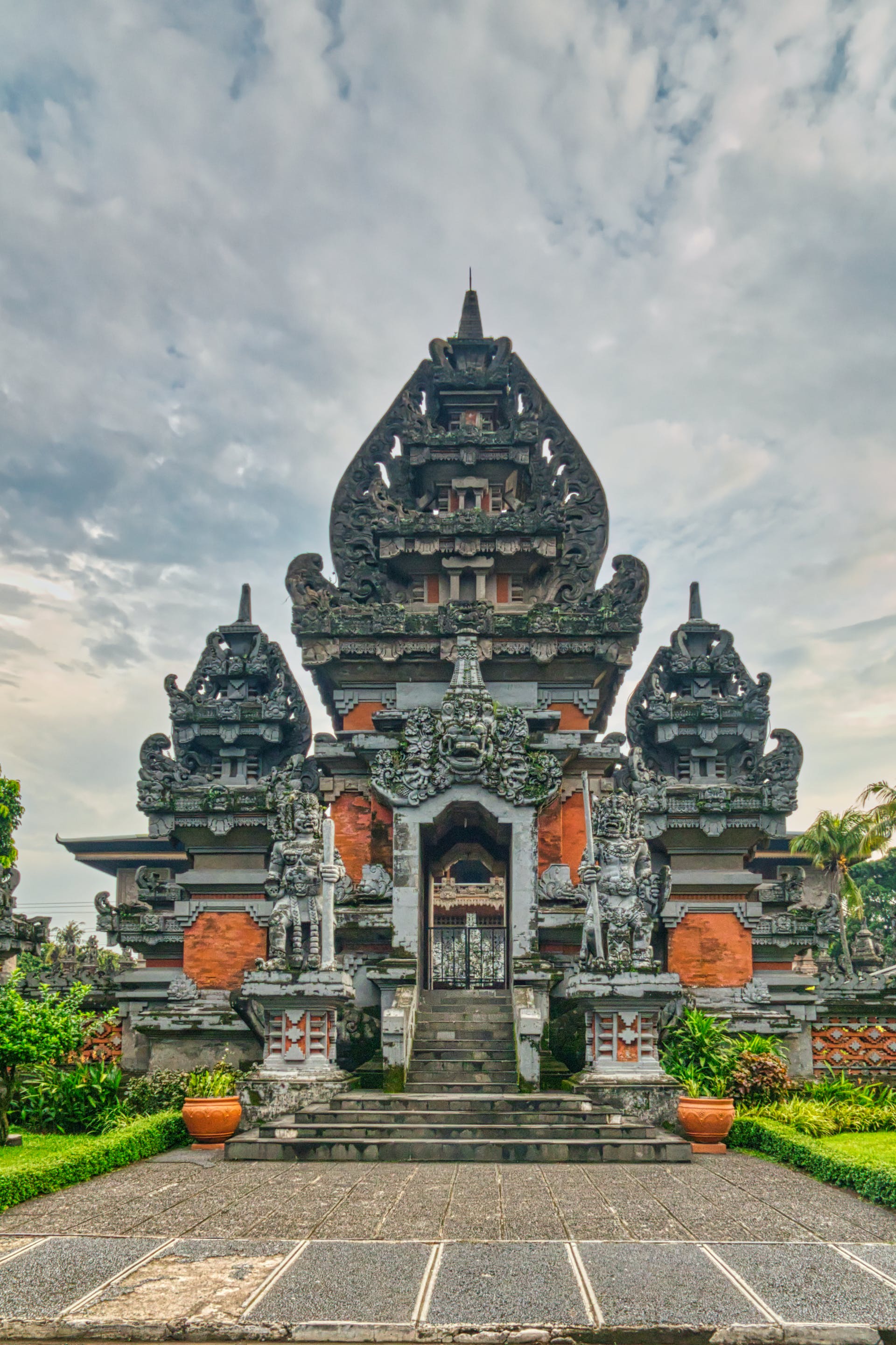 Some of the most beautiful and striking buildings in Jakarta are Hindu. Only a small percentage of locals are Hindu. Visitors will realise their presence through their temples and shrines. In the 6th and 7th Centuries, many Hindu scholars visited Java. It was not until the 15th Century that Islam started to become the primary religion. Muslims form the overwhelming majority but other religions are tolerated.
St. Mary of the Assumption Cathedral
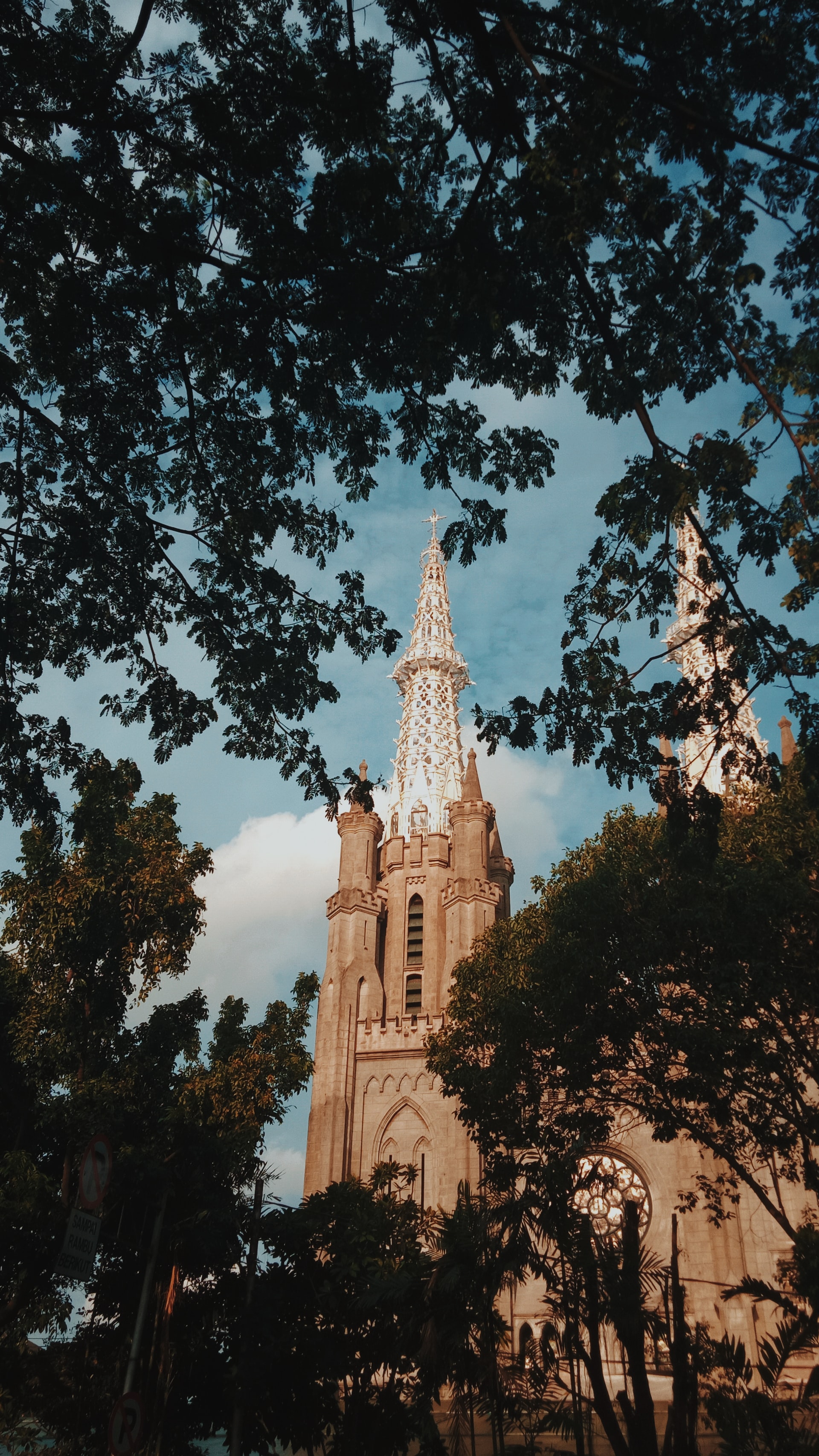 This cathedral is in the neo-gothic style regularly adopted at the turn of the 20th Century. You will find the Cathedral in the heart of Jakarta close to Istiqlal Mosque. The latter is one of the largest mosques in South East Asia.
It is a Roman Catholic Cathedral. Napoleon defeated the Protestant Dutch and installed his Catholic brother as King of the Netherlands early in the 19th Century. The result was that Catholicism spread in the Dutch East Indies.
The Cathedral dimensions are 60 metres by 10 metres with three 60 metre spires.
Messiah Cathedral
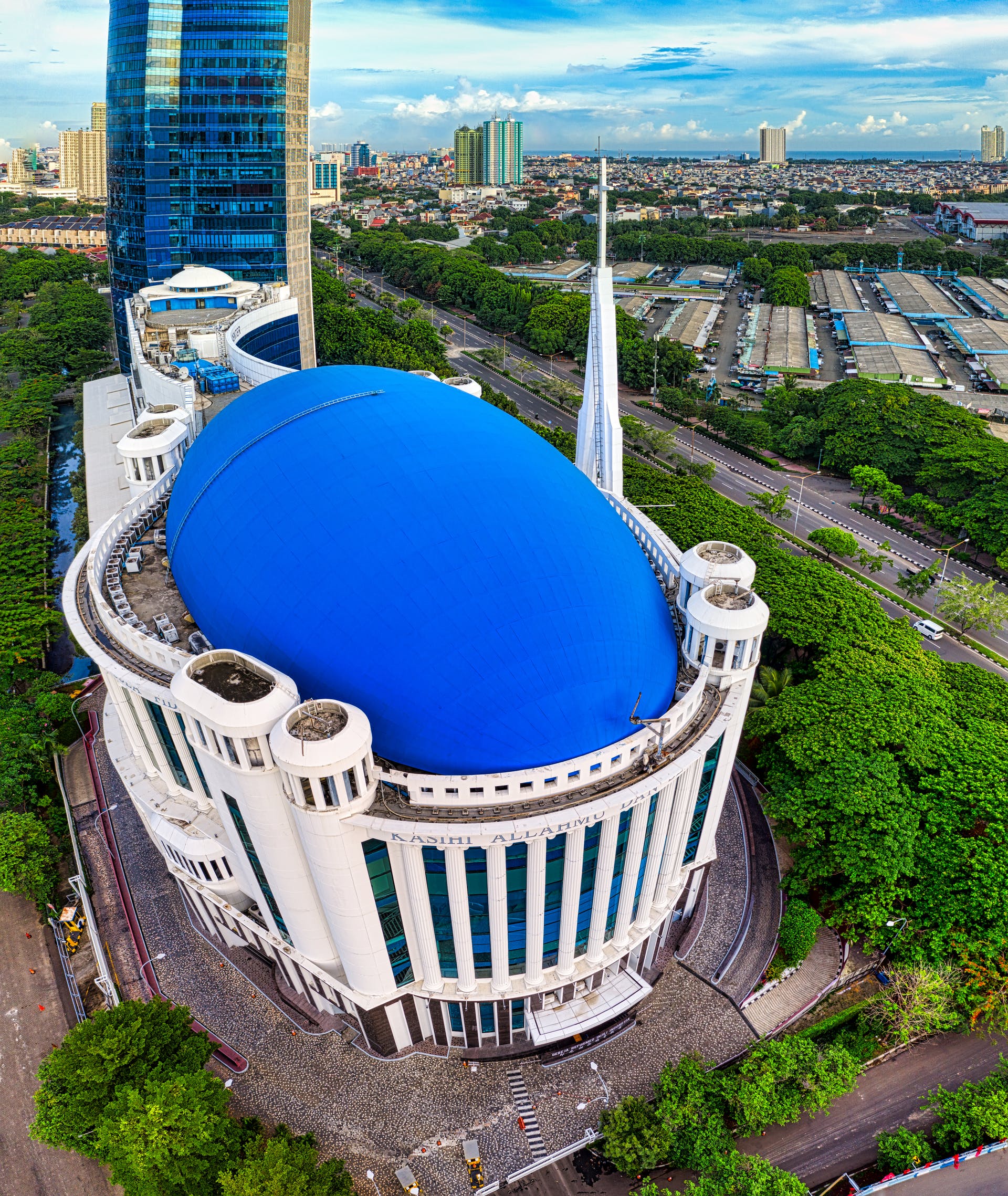 This modern cathedral opened in 2008. It represents the Indonesian Reformed Evangelical religion. It holds 8,000 worshippers in four different halls. The Main Hall, the Messiah, holds just over half of that capacity.
It does not really qualify as a cathedral despite its name. A cathedral should have a cathedra, which is a bishop’s throne.
Nural Iman Mosque
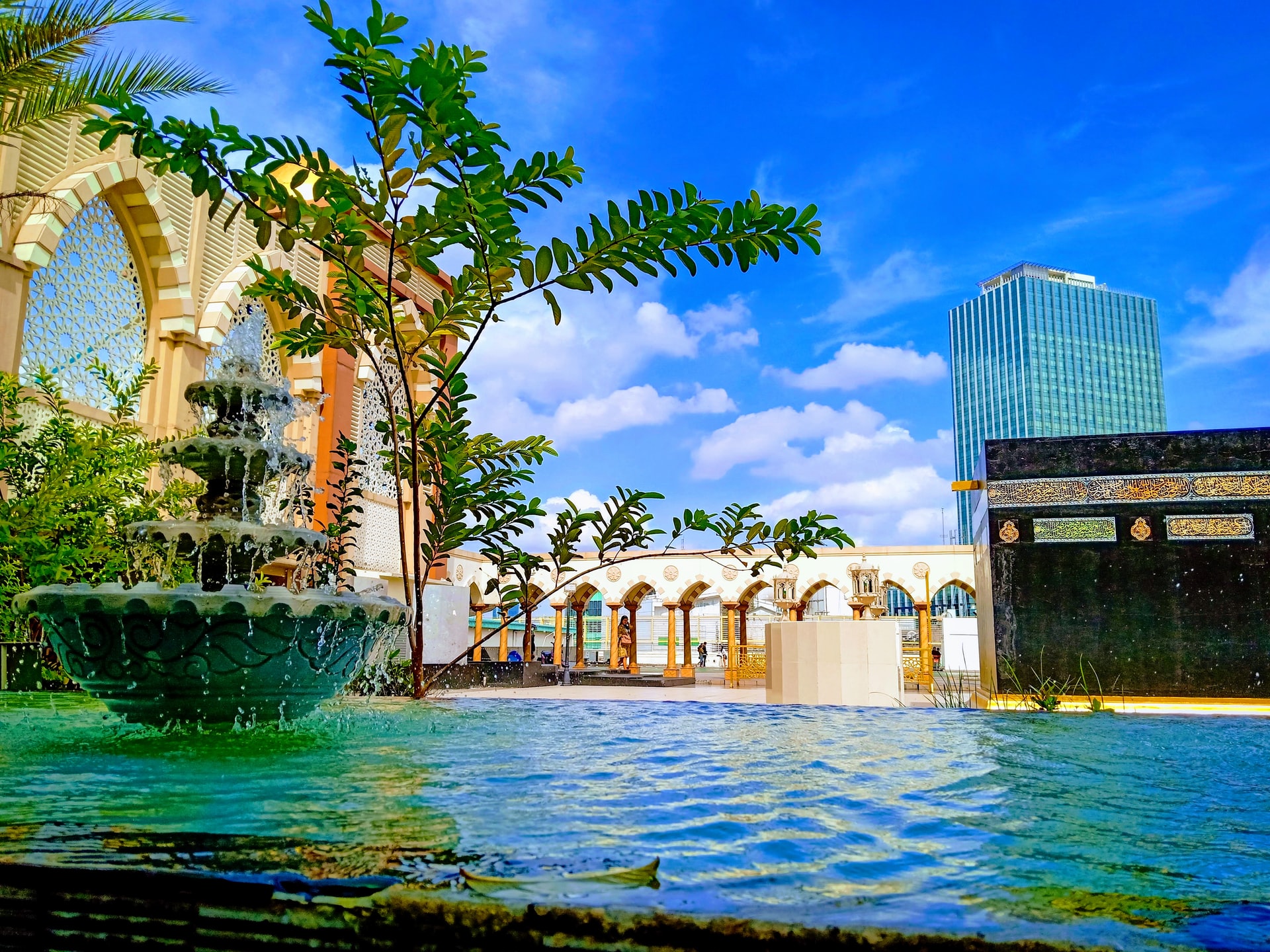 There are not many mosques that you will find on the 7th floor of a shopping mall. Nural Iman is in Block M Square above the Mall’s parking area. With city centre land in short supply, it is an imaginative way to produce a new mosque.
During Ramadan, Muslims sometimes set up small camps around the Mosque. They rise early to eat and pray before heading to work. Meals before dawn are free at Nural Iman. An increasing number of locals are choosing it as their place to pray.
Welcome Statue Fountain
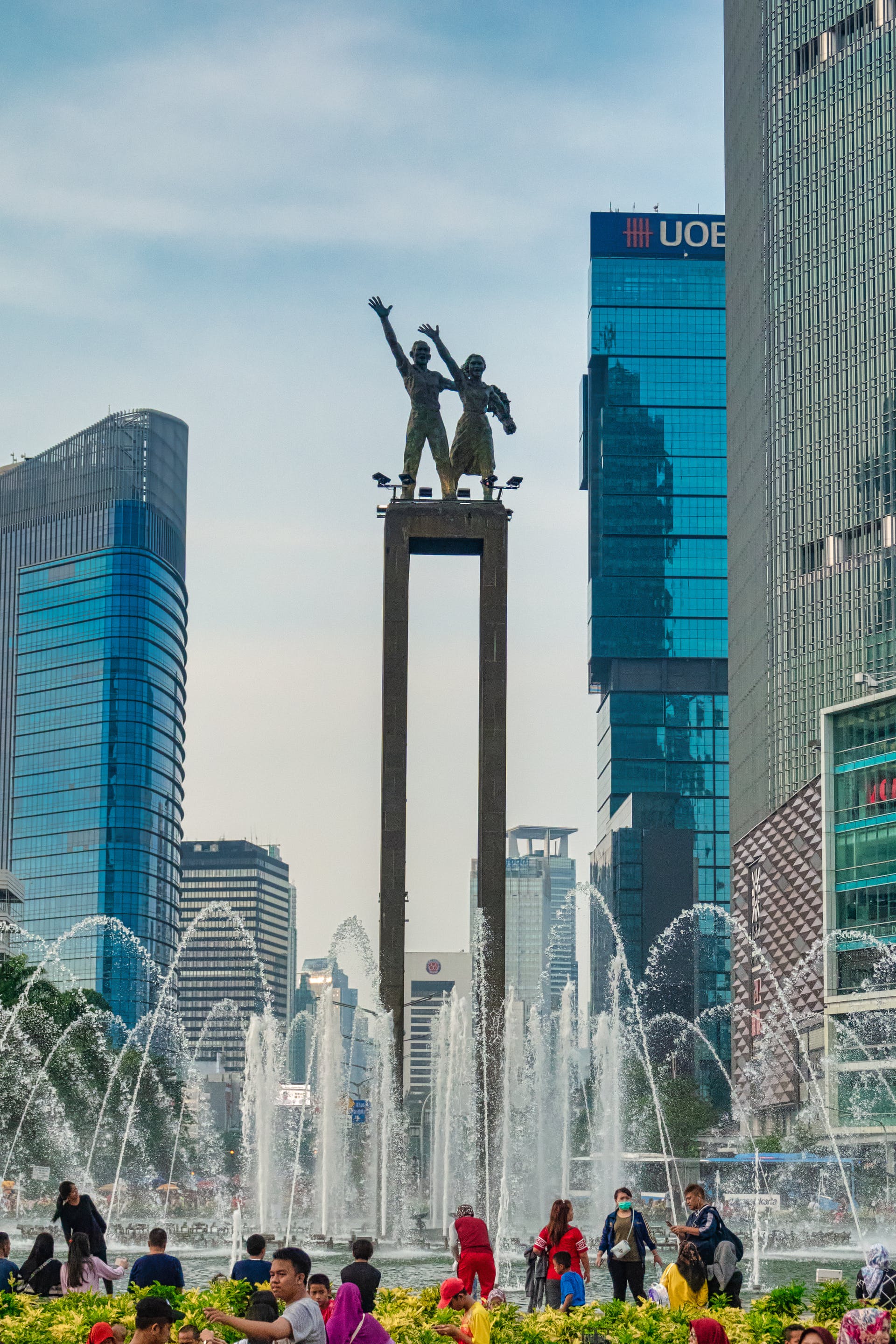 President Sukarno commissioned this fountain before Jakarta hosted Asian Games IV in 1962. The statue shows a man and woman holding flowers welcoming visitors to the City. Each figure is 7 metres high from the raised arm to the foot. The statue itself stands at over 30 metres.
Monas
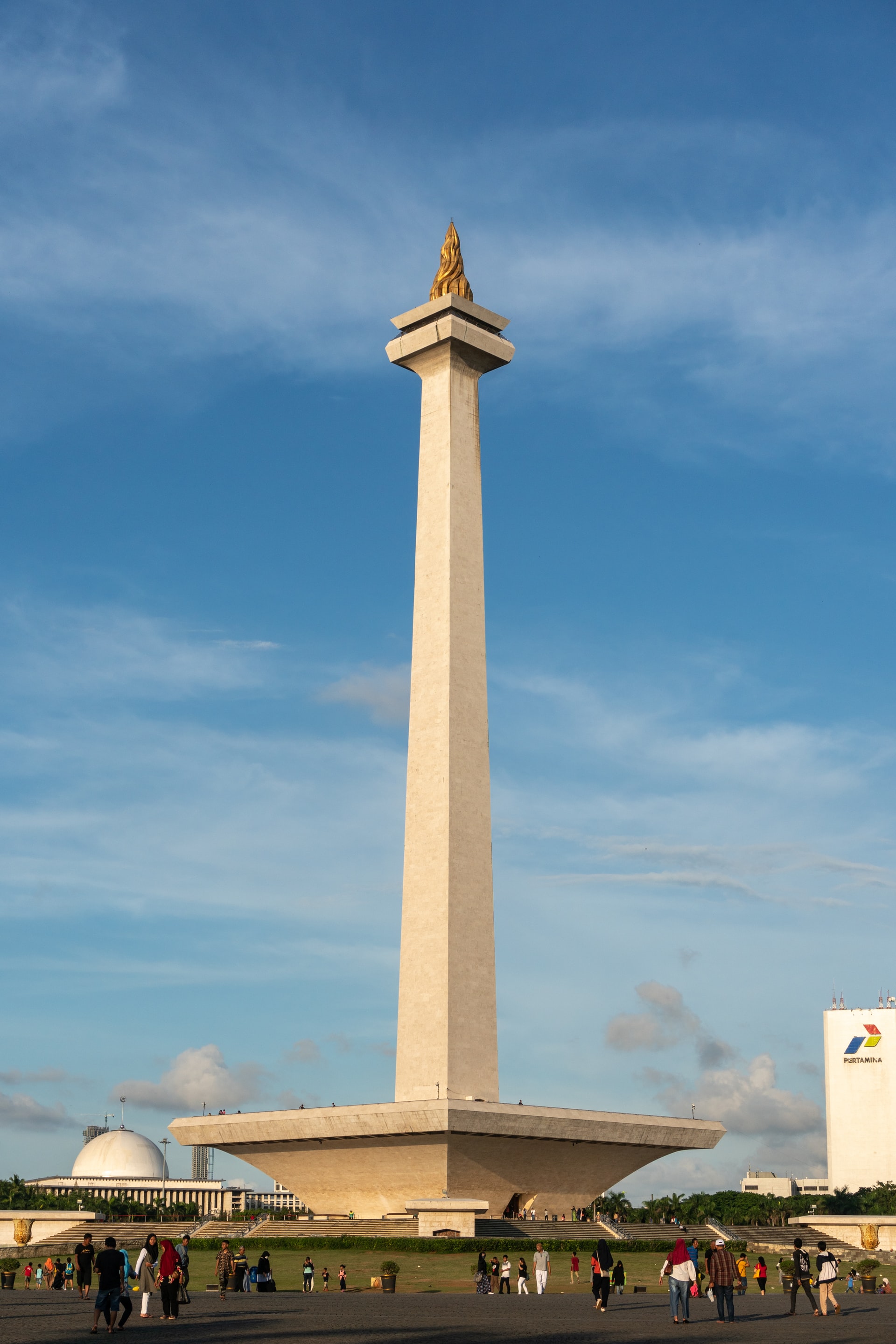 This obelisk in Merdeka Square in Central Jakarta is over 130 metres high. It commemorates the struggle for independence and hence is the national monument. It took 14 years to complete at the instigation of President Sukarno. Fourteen years later, the flame completed the job and the public was admitted.
Opening hours for the obelisk and the National History Museum are 0800 to 1600 each day except Monday. Recently the Government agreed to extend the hours into the night. Visitors can take the lift to a height of 115 metres and take some impressive Jakarta pictures.
Modern Skyline
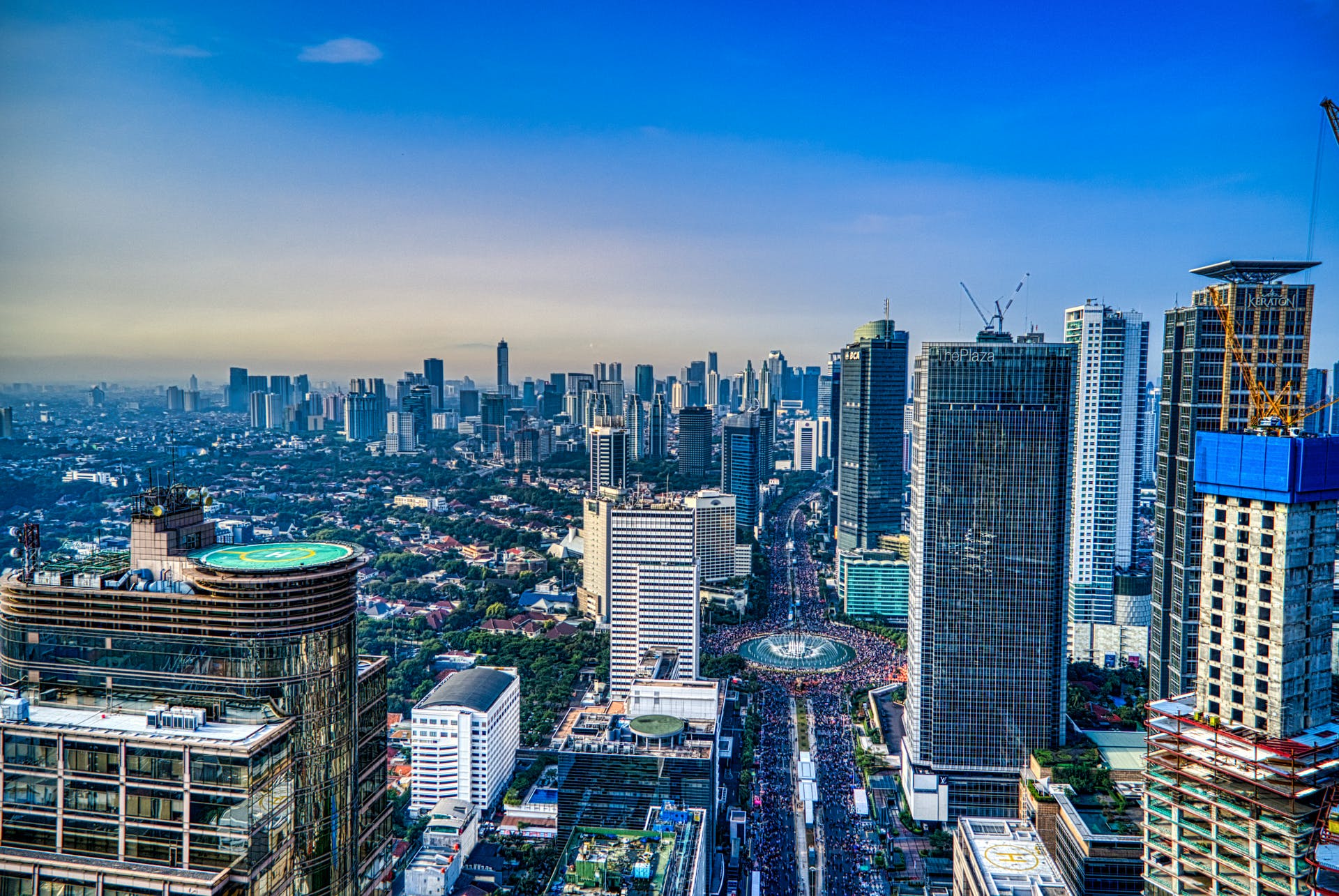 The commercial district, Senen, emerged in the 18th Century and has retained its importance. One of the best places to get a view over the City is Henshin Jakarta. During your Jakarta visit, go to this rooftop bar and restaurant. It is located in the Westin and serves Japanese and Peruvian cuisine.
Central Park Mall
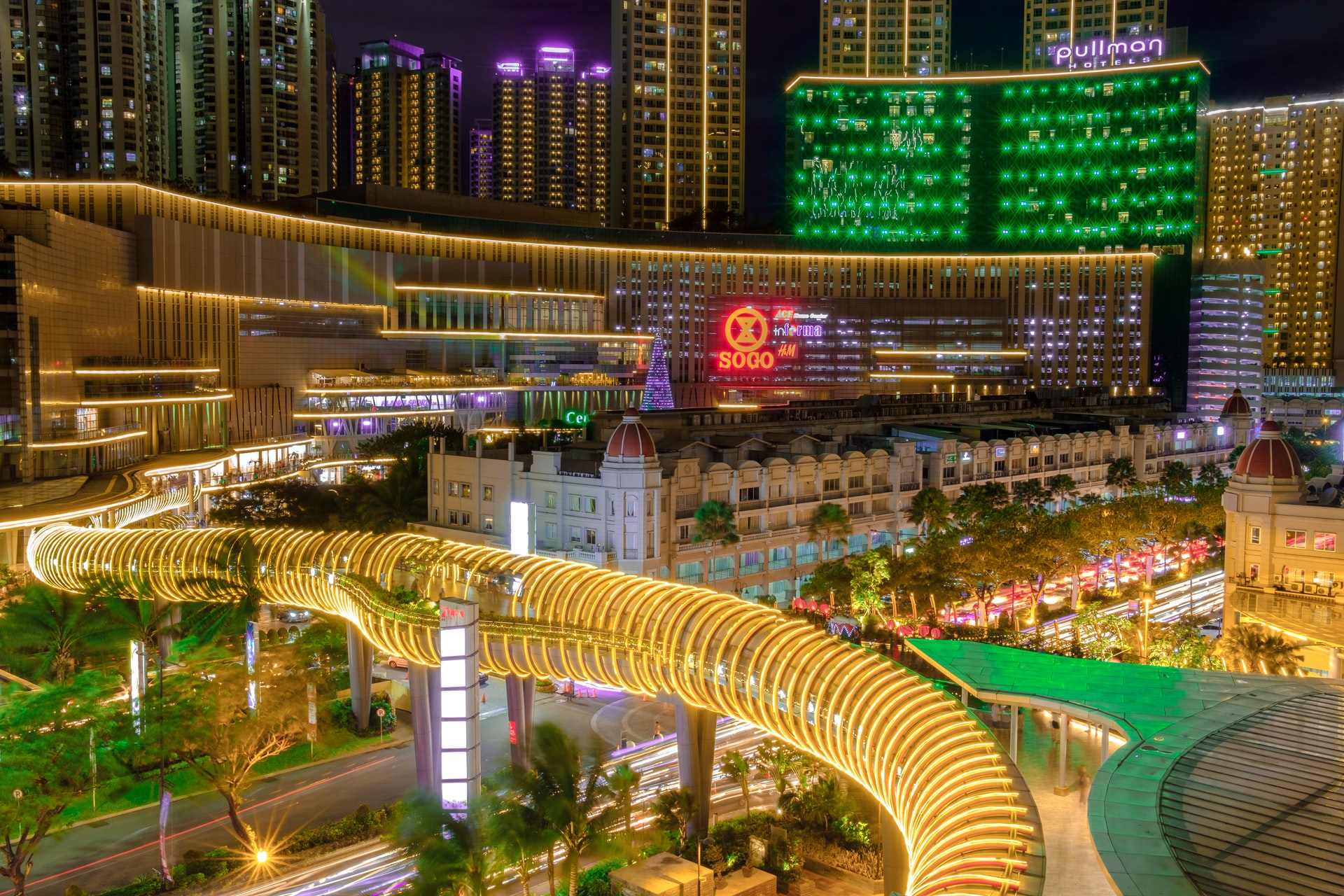 The shopping mall, office and apartment complex in West Jakarta is among the tallest buildings in the world. There are 56 floors of residences and the car park holds 6,000 cars. It takes its name from Central Park in New York. There are extensive outdoor park grounds here as well.
Within two years of opening, it received the 2011 Award, Asia Pacific Highly Commended Retail site.
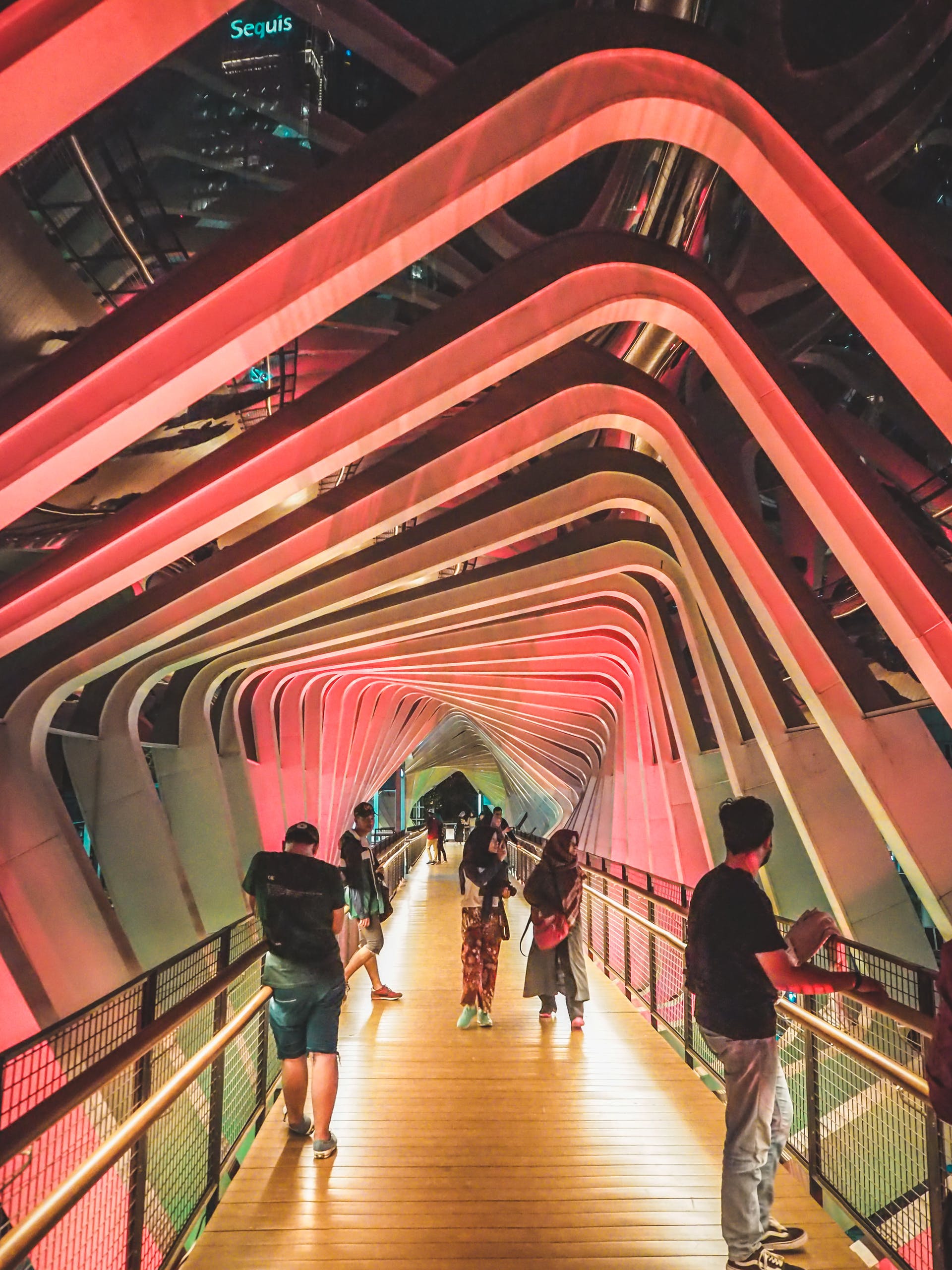 Jakarta is very much a mix of old and new. Even when the rains are around, modern walkways keep everyone out of the poor weather as they head to the shops.
Bung Karno Stadium
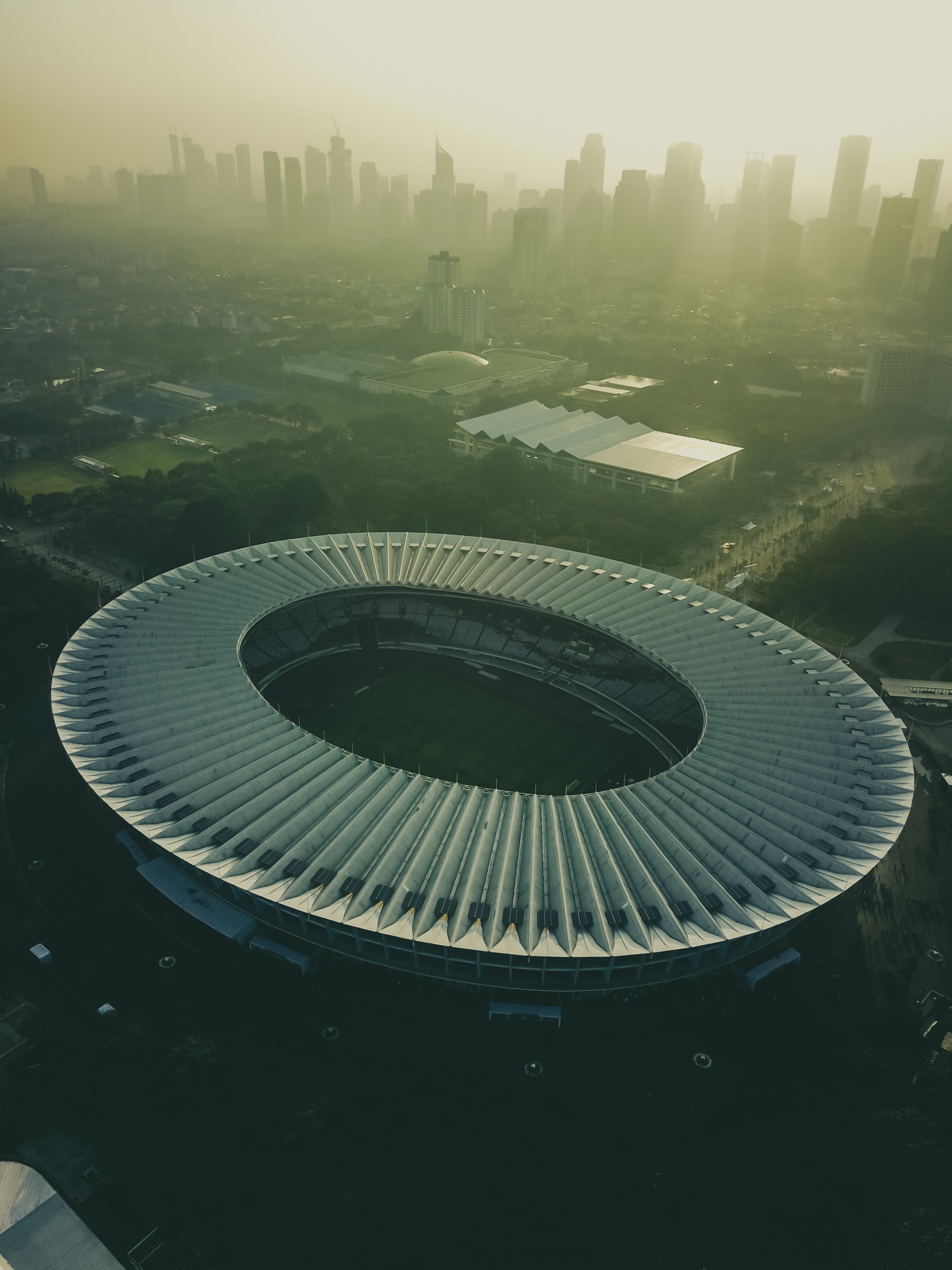 This is a multi-purpose stadium although it is now primarily for soccer. It gets its name from the First President, Sukarno, who led the struggle for independence from the Dutch. Its record attendance is 150,000 although its current capacity is not much more than half of that.
Water at Sunset
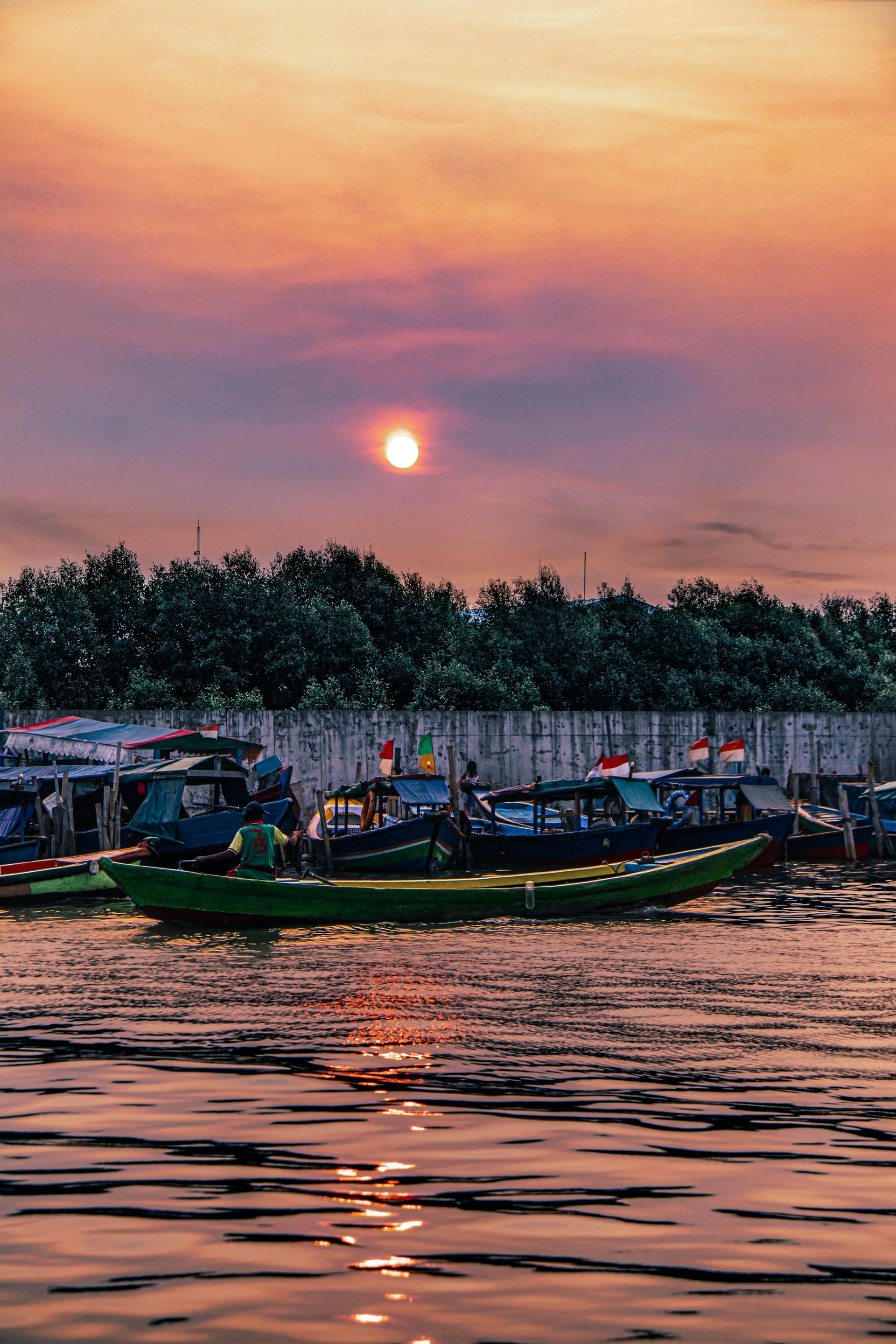 Cities like Jakarta inspire everyone to take photographs. Jakarta images of religious places and other landmarks are just one thing. If you go around Jakarta City, there are many photo opportunities in bright daylight and after dark. If you see one, get clicking because it will ensure your album of holiday photos has variety.
Pelabuhan Sunda Kelapa
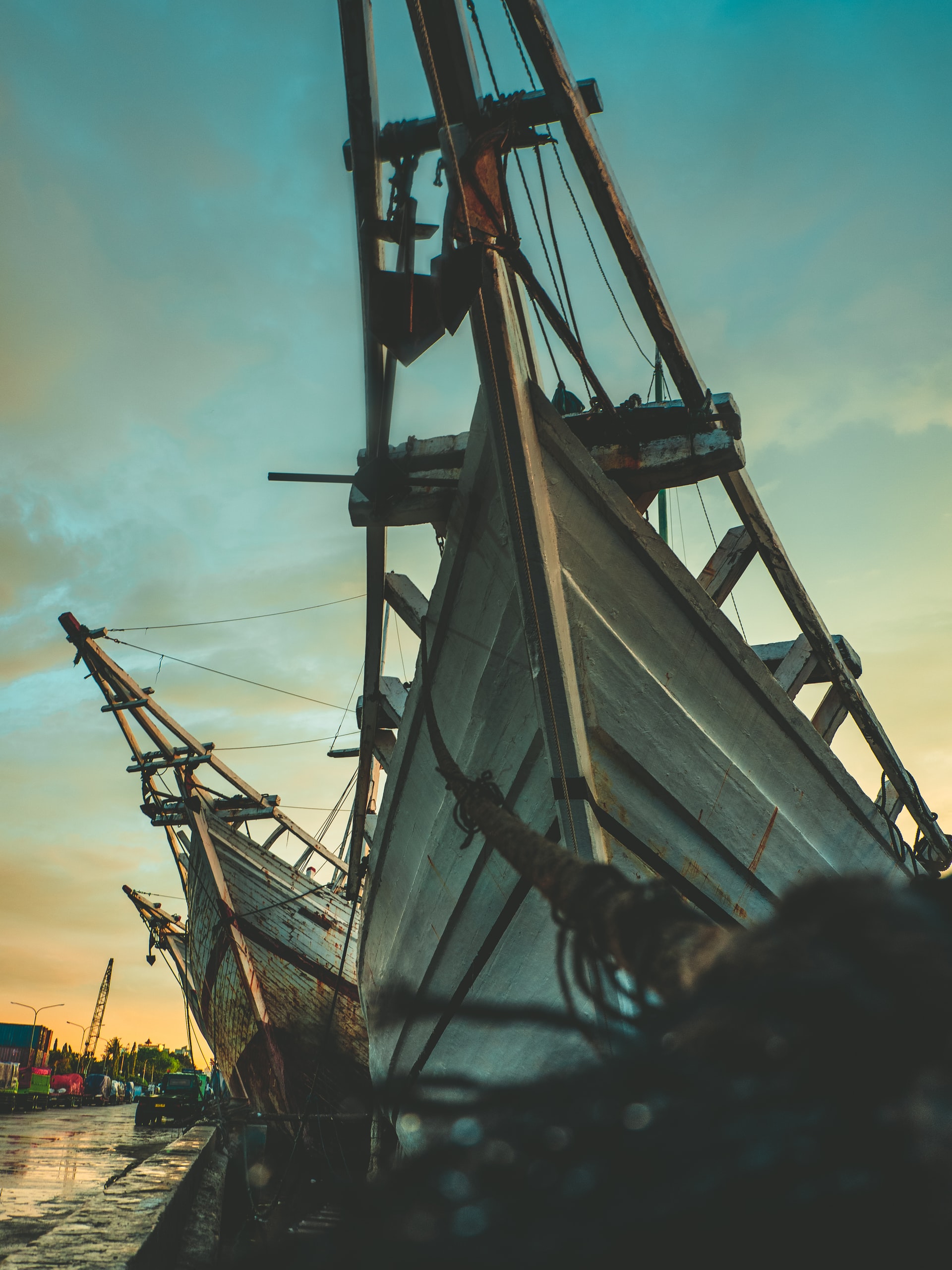 The old harbour is an interesting place to visit. It has been an important trading post since the Dutch first arrived. You can go on board the old wooden Phinisi schooners and see locals living on much smaller boats. If you are lucky, the fish auction will be in progress while you are there. Later in the day, that fish you see being bought will be on the menus of restaurants throughout the City.
Conclusion
Jakarta is a huge city on Java, itself an island of over 140 million inhabitants. It is a crowded city, exotic yet hectic at the same time. Many travellers experience Jakarta each year. They have a choice of accommodation, cheap backpacking places up to 5-star luxury. Wherever you stay, there is plenty to see and do. The religious landmarks are particularly impressive and your Jakarta photos should reflect that.